Ferns Old Graveyard Conservation Report

No Comments

Background to the Project

The Ferns Old Graveyard conservation report was commissioned by Ferns Community Development in association with Ferns Tidy Towns and Ferns Project groups with funding provided through the Heritage Councils Community Heritage Grant Scheme 2025.

The policies and recommendations in the report aim to enhance and conserve the old graveyard.

Objectives

The Ferns Old Graveyard conservation survey and plan will enable local stakeholders to establish a framework which will ensure the preservation and enhancement of the site for future generations and achieve the following aims.

  • To understand the historical and archaeological significance of the site
  • Preserve the built heritage of the old graveyard and address the condition of the boundary wall
  • To assess, identify, evaluate and mitigate against current threats and vulnerabilities to the old
    graveyard
  • To preserve and enhance the sites biodiversity and mitigate against climate change
  • Create awareness of this historic graveyard and ensure its preservation for locals and visitors alike
Historical Significance

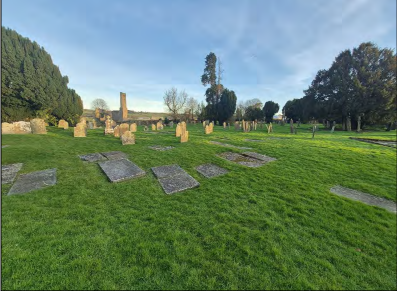
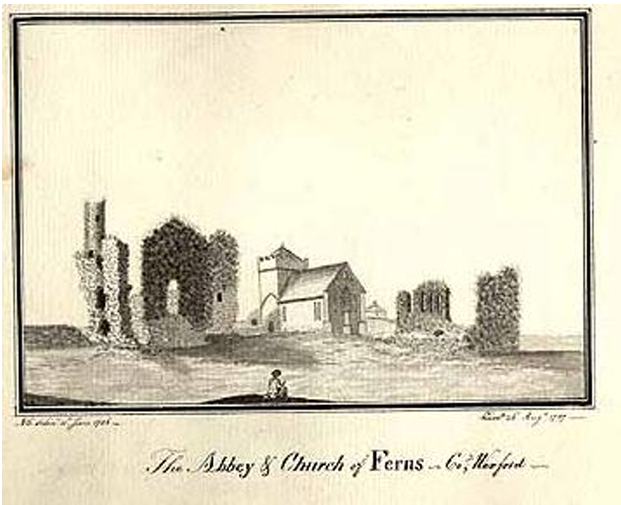
Ferns Old Graveyard was the site of a major 6th-century monastic foundation by St. Aidan (Mogue) and remained an important ecclesiastical centre throughout the medieval period. The site shares an association with St. David of wales through historic and modern cultural connections. It is the final resting place for some notable historical figures including Fr. John Murphy (1798 Rebellion) and Dermot MacMurrough, King of Leinster (traditionally).

Archaeological Significance

The Old Graveyard is situated upon the site of an important medieval monastic and ecclesiastic centre, is designated a monument under the National Monuments Act 1930-2014 and is listed within the record of monuments and places (RMP) (Reg No. WX015-003008) with three other monuments within its confines; a high cross (WX015-003013), cross slab (WX015-003030) and sub-surface archaeological remains of an ecclesiastical enclosure (WX015-003031). It contains ex-situ medieval masonry within its
grounds and built into the boundary walls. Memorials within the graveyard display unique designs and iconography, reflecting local vernacular craftsmanship. Sub surface archaeological remains within the site form an important part of the archaeological resource both locally and nationally

Architectural Significance

The boundary walls of Ferns Old Graveyard are defining architectural and spatial elements that continue
the historic ecclesiastical enclosure first established over a millennium ago. They delineate the sacred perimeter of the early monastic and later medieval graveyard, preserving the spatial organisation and enclosure traditions that have framed this burial landscape for centuries. Constructed primarily from locally sourced greywacke and siltstone, laid in random or roughly coursed rubble with traditional lime based mortars, the walls exemplify vernacular Irish craftsmanship and the enduring use of indigenous
materials.


Medieval masonry survives within the graveyard grounds and is incorporated into sections of the boundary wall, representing rare and tangible evidence of early ecclesiastical construction and later adaptation. Embedded carved fragments and re-used dressed stone reflect centuries of alteration and repair, revealing how historic builders reused material from earlier ecclesiastical or funerary structures. These features offer direct insight into local building traditions, medieval ecclesiastical design, and patterns of stone recycling typical of long-lived sacred sites.


The walls form a coherent visual and structural framework that defines the setting of the graveyard, maintaining the historic relationship between enclosure, access, and landscape. They embody both functional and symbolic roles providing containment and protection while also expressing the sacred delineation of consecrated ground within the townscape of Ferns.


The memorials within the graveyard further demonstrate the evolution of commemorative practices and stone-carving traditions from the seventeenth to the twentieth centuries. Together with the boundary walls, they illustrate the continuity of craftsmanship, devotion, and cultural expression within the same enclosed space.


Collectively, these elements present one of the few largely intact ecclesiastical enclosures surviving in County Wexford. Their authenticity layered construction history, and patina of age make them a significant component of the region’s architectural heritage and a vital record of the evolving relationship between community, craft, and sacred space.

Ecological Significance

The graveyard site is evaluated as of county conservation value due to the occurrence of Harebell (Campanula rotundifolia), This is the only site in Wexford where it is found. The site is also of high local importance and possibly of county significance for the presence of the locally rare bryophytes – the liverwort Porella platyphylla and the moss Gymnostomum viridulum that grow on the walls. Bee hives present in the woodland retain the native black bee Apis mellifera mellifera. The walls also support a range of herb species, ferns, bryophytes and lichens.

Social Significance

The graveyard was a shared burial ground for both local Catholic and Church of Ireland communities. Despite being closed to new burials since the early 20th century it is still regularly visited reflecting an ongoing local importance.

Please read the following links to find out more about the findings and recommendations in the Old Graveyard Conservation Report. A steering committee has been set up to implement and oversee the recommendations. We look forward to hearing your thoughts.

Appendix 1: Archaeological Assessment Ferns Old Graveyard by Barry Lacey

Appendix 2: Old Ferns Graveyard Conservation Management Plan 2025

Appendix 3: Ferns Old Graveyard Ecological Assessment Report

Ferns Graveyard Wall Survey – GA Drawings Phase 1

Ferns Old Graveyard Southern Wall Layout Plan
Categories: Uncategorized

Keep Wexford Beautiful 2025 Awards

No Comments

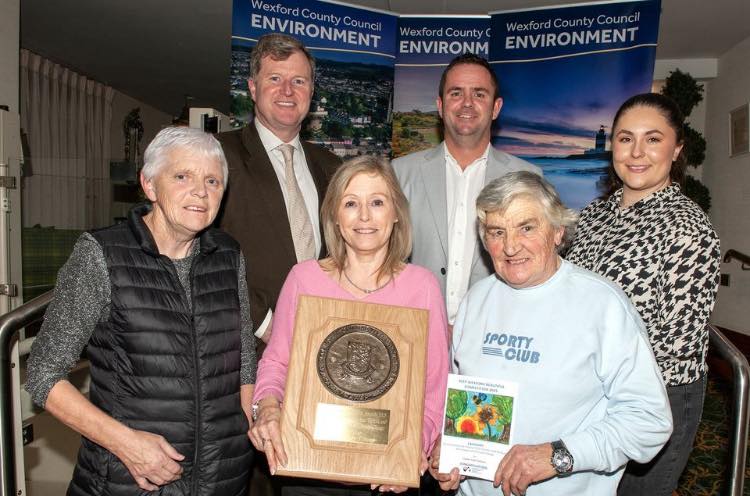
Ferns Tidy Towns are delighted to have been presented with two awards at the Keep Wexford Beautiful Environment Awards 2025. This competition is not just about maintaining a clean and well presented locality. It is about fostering pride in local communities and recognising and rewarding individuals and groups for their efforts. 

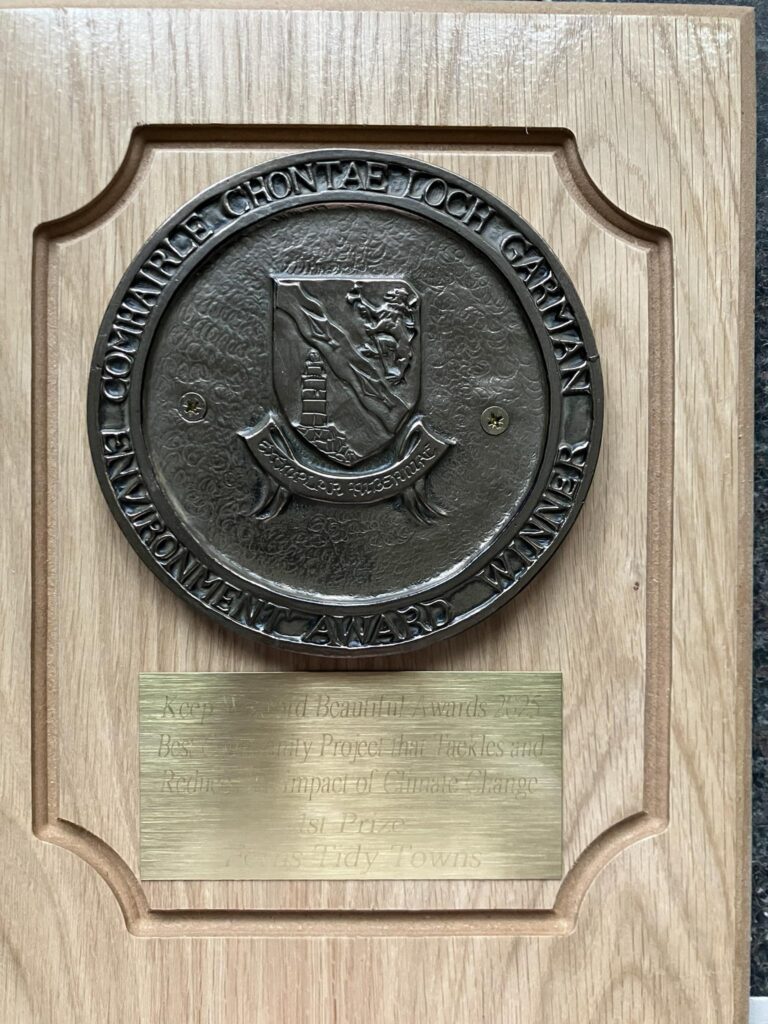
We won awards in two categories on the night. We were announced as the overall winners in the Best Community Project that Tackles and Reduces the Impact of Climate Change category and third place in the Best Environmentally Aware and Presented Town/Village category.

Check out this video to see some of our projects to help tackle and reduce the impact of climate change.

The following criteria is taken into account when judging entries
•    Community effort
•    Litter management initiatives.
•    Planting initiatives e.g. pollinator friendly planting, sustainable planting.
•    Private gardens represent a huge potential habitat and refuge for Ireland’s pressured wildlife.  By taking some simple actions, you will help to provide much-needed food and shelter for our pollinating insects, while creating a beautiful, colourful garden.  For further information visit – www.pollinators.ie  
•    Treatment of communal areas such as open spaces and grass margins.
•    Best environment initiatives – waste prevention / re-use /  composting / Biodiversity / energy / water conservation / recycling.
•    Best preservation and protection of a heritage site in sympathy with its character.
•    Best access initiatives and provision and promotion of inclusive space.

Thanks to our very hard working committee, Wexford County Council, CE scheme and RSS workers, primary schools, crèches, local businesses, clubs and the community for getting involved and supporting us over the last year. A special thank you to the children of St. Edan’s national School and Junior Tidy Towns members for taking part in the waste prevention project. Without your continued support these awards would not be possible.

Categories: Uncategorized

Think Before You Skip It – Circular Guide to Clear Outs

No Comments

Any type of renovation whether doing the work yourself or getting a builder requires a room or in some cases a full house clear out. The same advice can be taken on board when moving house. Think Before You Skip It and think circular economy and prioritise reuse, repurposing, and proper waste segregation.

During renovations, a circular economy approach can be a game-changer. By reusing, repurposing, or upcycling existing materials like reclaimed wood, salvaged fixtures, or donated items, you can significantly reduce waste and minimize the demand for new, resource-intensive materials. This not only helps the environment but can also add unique character to your space. Plus, you can save money by sourcing second-hand materials or repurposing items you already have, making your renovation more sustainable and budget-friendly. It’s a win-win for you and the planet!

When moving house, adopting a circular economy approach can make a huge difference. Instead of buying new boxes, furniture, or supplies and then trashing them after a short use, consider reusing or repurposing items you already have or finding second-hand alternatives. You can also donate or sell items you no longer need, reducing waste and giving others a chance to reuse them. By doing so, you’ll not only reduce your environmental footprint but also save money and support sustainable living. Plus, you might discover some hidden gems or unique items to take with you to your new place!

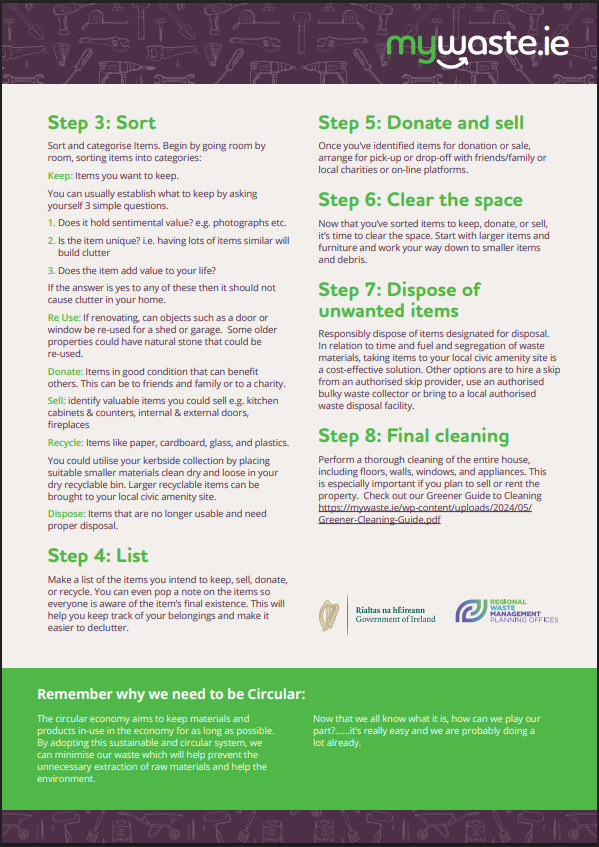
Here are some steps that will assist you to do a clear out in an efficient and environmentally friendly way:

Remember why we need to be Circular:

The circular economy aims to keep materials and products in-use in the economy for as long as possible. By adopting this sustainable and circular system, we can minimise our waste which will help prevent the unnecessary extraction of raw materials and help the environment.

Now that we all know what it is, how can we play our part?……it’s really easy and we are probably doing a lot already!

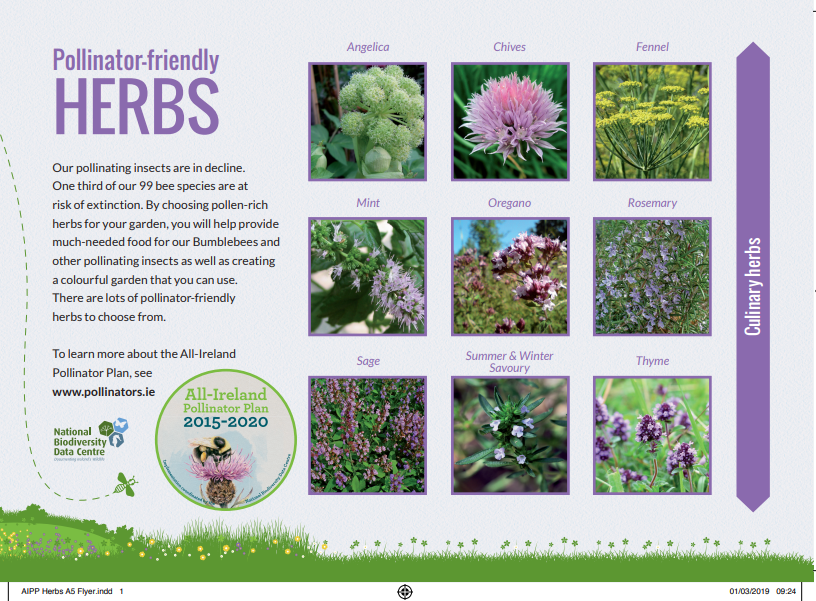
Pollinator-Friendly Herbs to provide pollen rich food for our bees

No Comments

Our pollinating insects are in decline. One third of our 99 bee species are at risk of extinction.

There are 99 different species (types) of bees in Ireland. We have one honeybee, 20 different bumblebees and 77 different solitary bees. Bumblebees and solitary bees are known as wild pollinators. Research tells us that if we want our crops and wild plants to be pollinated we need an abundance and diversity of wild pollinators as well as healthy honeybees. While we may not be able to change the global situation on our own, each of us can try to make our gardens havens for bees by growing simple plants such as herbs.

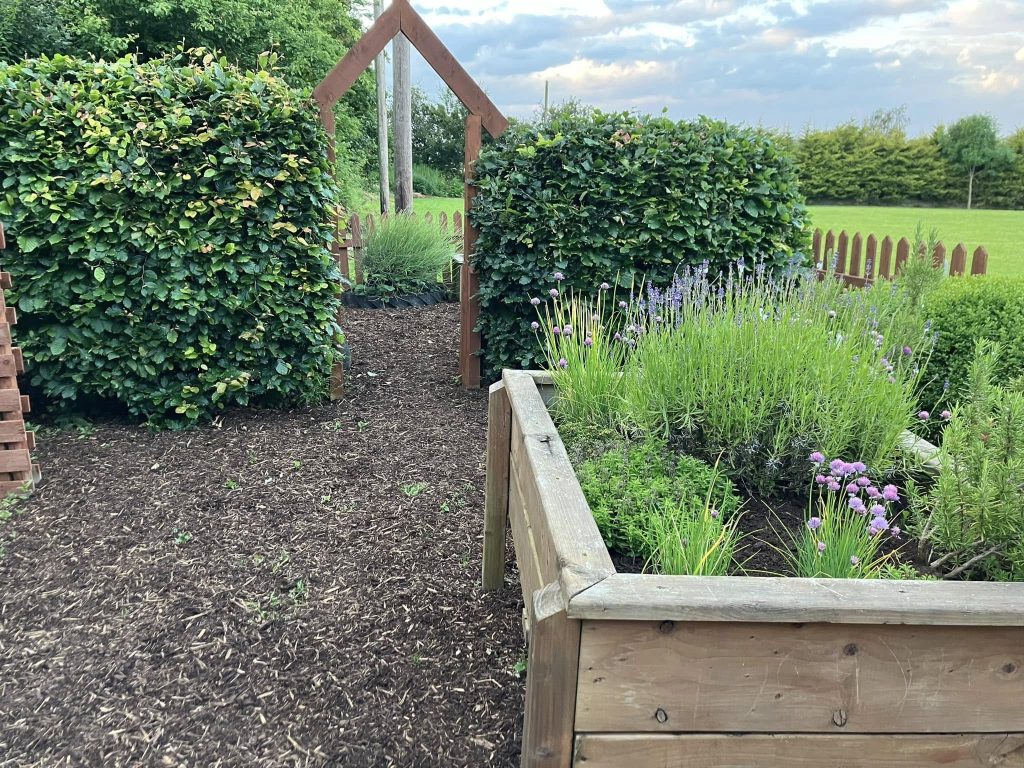
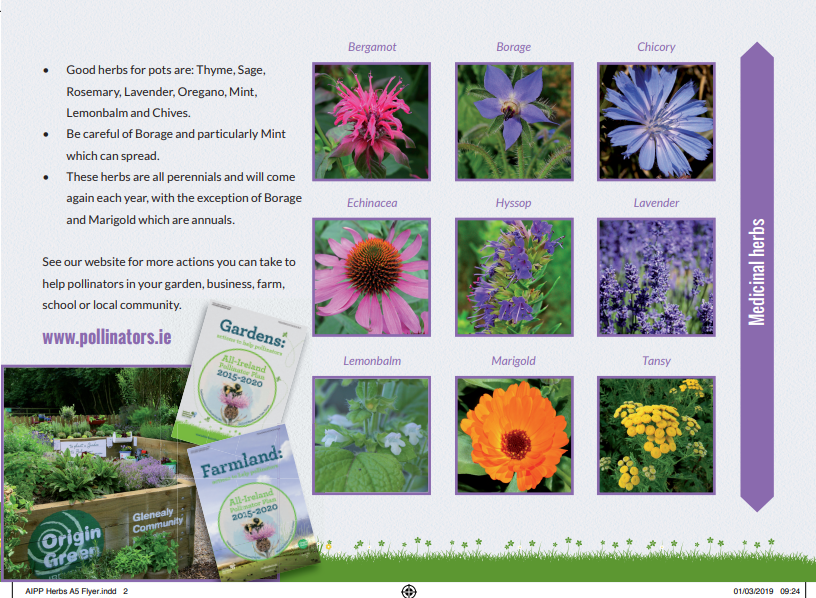
Pollinator-friendly raised herb bed at Ferns Tidy Towns Community Vegetable Garden

Herbs in our Gardens

Herbs are among the most useful plants for attracting bees to our gardens. They grow well alongside other garden species, or in specially designed areas, and some are suitable for containers. Low-growing herbs, such as thyme, can even be used to make fragrant green paths. By choosing pollen-rich herbs for your garden, you will help provide much-needed food for our Bumblebees and other pollinating insects as well as creating a colourful garden or planters that you can use. There are lots of pollinator-friendly herbs to choose from. Most herbs are adaptable to a range of soil and growing conditions and, for the most part, pretty easy to grow.

Good herbs for pots are: Thyme, Sage, Rosemary, Lavender, Oregano, Mint, Lemon balm and Chives. Be careful of Borage and particularly Mint which can spread. These herbs are all perennials and will come again each year.

Thyme:

Thyme is known for its fragrant leaves and flowers that attract various bees and hoverflies. 

Sage:

Bees are particularly drawn to the blue and purple flowers of sage, providing a valuable food source. 

Rosemary:

This drought-tolerant herb has fragrant needles and blue-purple flowers that attract various bees, including mason bees, flower bees, bumblebees, and honeybees. 

Oregano:

This herb is a good source of nectar for various pollinators

Borage:

Borage boasts bright blue flowers that are very attractive to bees and butterflies,

Chives:

These herbs have pretty blooms and tasty stems and also attract bees and butterflies

For more actions you can take to help pollinators in your garden, business, farm, school or local community see www.pollinators.ie

Categories: Sustainable Living

Successful use of the Deposit Return Scheme

No Comments

What a fantastic result! To date, a massive 50,100 units per month is currently being recycled at the Deposit Return point in Centra, Ferns. This figure is increasing month after month and is testament to the community helping to protect our environment by playing their part in leading us towards a more sustainable future by valuing our resources and increasing recycling rates.

What is the Deposit Return Scheme?

The Deposit and Return Scheme went live in February 2024 and is an exciting new, circular initiative which has transformed the way we think about empty drinks bottles and cans. The refundable deposit incentivises us to return these containers so producers can make new bottles out of old bottles and new cans out of old cans, saving materials, energy and reducing litter.

The Deposit Return Scheme works by charging anyone who buys a drink a small deposit for the plastic bottle or can that it comes in. Customers get this money back when they return the container to a retailer or other collection point to be recycled.

The scheme helps to tackle the estimated one billion plastic bottles and 1.6 million aluminium cans that are thought to currently end up in landfills/incinerators or littered in the environment.

We have noted a huge reduction in litter along our roads during our litter picks. We have also noticed an increase in members of the community stopping and picking up plastic bottles and cans from the street and doing a #2minutestreetclean. Another step to moving towards a cleaner and more sustainable Ferns.

As a Circular Economy Initiative the Deposit Return Scheme is helping the community to move away from the ‘take make and dispose’ culture to one of returning valuable materials, and keeping them in the economy for as long as possible.

Did You Know?

A plastic bottle can be recycled up to 7 times and aluminium cans may be recycled infinitely. The Deposit Return Scheme for single-use plastic bottles and cans allows consumers to return them for recycling and get a deposit back. This scheme encourages proper recycling and ensures a higher quality of recycled materials.

By reusing and recycling more effectively, we save energy and water, reduce landfill and there is a lower impact on the planet.