Any type of renovation whether doing the work yourself or getting a builder requires a room or in some cases a full house clear out. The same advice can be taken on board when moving house. Think Before You Skip It and think circular economy and prioritise reuse, repurposing, and proper waste segregation.
During renovations, a circular economy approach can be a game-changer. By reusing, repurposing, or upcycling existing materials like reclaimed wood, salvaged fixtures, or donated items, you can significantly reduce waste and minimize the demand for new, resource-intensive materials. This not only helps the environment but can also add unique character to your space. Plus, you can save money by sourcing second-hand materials or repurposing items you already have, making your renovation more sustainable and budget-friendly. It’s a win-win for you and the planet!
When moving house, adopting a circular economy approach can make a huge difference. Instead of buying new boxes, furniture, or supplies and then trashing them after a short use, consider reusing or repurposing items you already have or finding second-hand alternatives. You can also donate or sell items you no longer need, reducing waste and giving others a chance to reuse them. By doing so, you’ll not only reduce your environmental footprint but also save money and support sustainable living. Plus, you might discover some hidden gems or unique items to take with you to your new place!
Here are some steps that will assist you to do a clear out in an efficient and environmentally friendly way:
Remember why we need to be Circular:
The circular economy aims to keep materials and products in-use in the economy for as long as possible. By adopting this sustainable and circular system, we can minimise our waste which will help prevent the unnecessary extraction of raw materials and help the environment.
Now that we all know what it is, how can we play our part?……it’s really easy and we are probably doing a lot already!
When planting new trees in towns and villages, there is a wide selection to choose from. Both native and introduced species can be suitable for urban settings. Generally, it is preferable to use native species, such as oak and alder, on the fringe of settlements as they blend well with the rural environment and create a more natural, informal effect as well as promote biodiversity. Knowledge of what grows well on similar sites nearby is a good guide. Some introduced species, especially beech, chestnut and lime, can also be suitable on the fringe of settlements or where required to retain local character. Other introduced species are more suitable for planting within the urban area, in the streetscape, green areas and other public spaces.
Some introduced species may endure exposed coastal locations better than natives, such as the evergreen oak (in areas not liable to severe frosts). Trees that form shallow, surface roots, such as ornamental cherries, can disrupt footpaths and paved surfaces and are best suited to planting on open spaces and green areas. Where trees are planted to create an avenue effect along approach roads and other transport corridors they should be of a single species at a consistent spacing along a route.
Other factors to consider:
• Sufficient space available for root and crown spread at maturity. Roots spread beyond the branch area of the tree with most roots found in the top 45cm of soil and most absorbing roots found in the top 15cm of soil.
• Many Irish place names are associated with or derived from trees and this may be reflected when choosing tree species e.g. Glenbeigh, or in Irish, Gleann Beithe, means valley of the birch trees
• The future height and width of a tree should be considered to ensure compatibility with the scale and character of a space and surrounding buildings at full maturity.
• Colour: Trees with distinctive coloured foliage such as purple hazel and copper beech, variegated maples should be used sparingly as the vibrant colours can appear over-whelming. Rows of trees with crimson leaves should usually be avoided as they can be visually oppressive while trees with variegated foliage often appear gawdy and unnatural. Trees of strong individual character (e.g. copper beech) are best used as specimens with plenty of space around them.
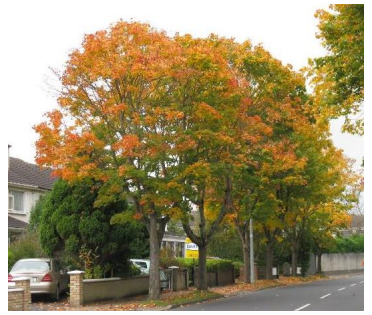
Norway maple trees grow tall and provide good autumn colour
• Seasonal interest: select trees that can bring year-round interest, i.e. trees with attractive bark, vibrant autumn leaf colour, flowers, catkins or berries, and evergreen species in appropriate locations.
• Fruit, berries and nuts: Trees such as horse chestnut, hawthorn, mountain ash and whitebeam, all produce attractive displays of fruit or berries. Although highly suitable in green areas and parklands, fruit-bearing trees may not be suitable in streets or in pedestrian areas for safety and cleansing reasons.
• Trees are subject to an increasing number of pests and diseases. Avoiding over reliance on a narrow range of species will limit the impact of these threats. The resilience of our tree population can be enhanced by increasing the diversity and variety of new trees planted. However, where the same type of tree species creates an avenue or clearly defined group within part of a street, new and replacement trees should be of the same or closely matching species in the interest of visual continuity.
• Use large canopy trees wherever space allows. Large-growing tree species confer much greater environmental benefits to urban areas than small trees
• Wildlife and biodiversity value – many trees, such as lime, sycamore, horse chestnut and willow provide excellent bee forage.
Some key points to remember when planting
• Do not let the roots of bareroot trees dry out in transit or on site. Keep them wrapped in plastic or covered with moist earth.
• Make sure the planting hole is big enough to take the roots fully spread out.
• Keep the ‘soil mark’ at the base of the stem at ground level.
• Always water the plant immediately after planting.
• Staking is necessary for any newly planted tree, over 2m to prevent wind-rock and movement of the roots which can slow down establishment.
• A double stake is used for staking containegrown and root-balled trees. Two stakes are inserted opposite each other and secured to the trunk by long ties or a timber crossbar and tie. This method is also useful on windy sites.
• An angled stake is used for trees planted on slopes. Drive a stake in before or after planting at a 45-degree angle, leaning into the prevailing wind.
Aftercare of newly planted trees
• For a tree to become established, a maintenance programme should be followed for at least the first two growing seasons, and ideally for five years after planting. It can be based on the following;
• Watering – carried out regularly during the first two growing seasons. There is often a dry period from April to June and many newly planted trees die at this time through inadequate watering. During prolonged dry weather, the soil around young trees should be soaked thoroughly at least every week. For semi-mature specimens continue deep watering for five years after planting.
• A single stake is the standard method for staking bare-root trees, with the stake inserted before planting. The stake should be about one-third the height of the tree and is inserted on the side of the prevailing wind so that the tree is blown away from the stake.
• Tree stakes and ties should be checked regularly. Tree ties may need adjustment where they have become too tight, loose stakes should be firmed and broken ties replaced as soon as possible to avoid damage to the tree. Ties and stakes should be removed after two or three growing seasons, or once a tree is stable.
• Control weed growth keeping a circle around young trees, for an area of at least 1 metre in diameter, clear of grass, weeds, or other plants. This reduces competition for moisture and nutrients and also helps to protect tree trunks from lawnmower damage. Applying 50-100mm of mulch will keep soil temperatures cool, retain water, and discourage weeds. Top-up and replace mulch as needed.
• Apply fertiliser if absolutely necessary. Never fertilise stressed trees.
• Remove dead or injured branches immediately
Formative pruning:
• Young, immature trees benefit from pruning in their formative years. This should be carried out in accordance with good arboricultural practice.
• It involves removing crossing branches and potentially weak forks to encourage a good natural shape and reduce the need for major pruning when the tree is mature.
• Once established, the requirement to prune trees should be minimal, to remove diseased or dead branches or carry out crown lifting.
• The branches of wider canopy trees can be gradually removed, ideally over the first 6-10 years, as the trees grow taller to lift the crown and provide an eventual clear stem of 2.5m in pedestrian areas, 3m on cycleways and up to 4.5m on streets and vehicular routes.
• All pruning should leave trees with a well-balanced, natural appearance.
Care of established trees
Old, mature and established trees significantly contribute to the unique character and identity of a landscape setting and often hold a special place in the hearts of local people. For this reason, they require careful management to ensure their longevity. While the majority may require little or no intervention, the following are considerations in their management:
Protect tree bark from damage: Avoid using weed trimmers or lawn mowers around trees which can cause damage to the bark. Hand-pull weeds instead or mulch the area around the base of the tree to avoid this problem. Alternatively leave longer grass around established tree groups to reduce the amount of grass cutting. Do not fix signs, flags or other items to the trunks of trees as nailing anything into a tree is intrusive and every wound creates a potential entry point for decay • Disease: Be vigilant for any signs or symptoms of disease, stress or decay and, where necessary, seek appropriate advice from a qualified arborist.
Avoid planting at the base of trees: The practice of planting annual bedding plants or other planting at the base of trees is discouraged, as the root zone of the tree is disturbed annually by cultivating the soil and digging planting holes. Bedding plants also compete with the tree roots for air and moisture. Built edges/ planter walls around trees are also discouraged as building up soil around a tree can suffocate its roots and cause a tree to decline.
Ivy on trees: Ivy provides a sheltered habitat for a range of wildlife and is a great source of autumn nectar for insects and late winter fruit for birds. It is not parasitic and does not directly affect the health of the trees it climbs. However, where ivy has taken hold on young, weak or mature trees, it may compete for water and nutrients and suppress healthy growth. The density of its bushy growth can obscure cavities or defects from view and increases the tree’s vulnerability to wind damage. In these limited situations, removal of ivy may be deemed necessary for risk management purposes. Ivy should not be removed as a matter of course. It is a native plant and woodland species.
Removal of sucker growth: Some trees such as limes are prone to sucker growths that appear from the root system at the base of the tree. This can detract from the health of a tree as energy is put into producing these shoots. On roadside trees, suckers can be a visibility hazard for road users. Sucker growth should be removed as part of annual maintenance.
Pruning: Older trees do not tolerate pruning as well as younger trees and substantial or unnecessary pruning should be avoided. No branch should be removed without a good reason. Seek the advice and services of an insured tree care professional for large pruning jobs, hazard trees, and insect or disease problems. Non-professionals should never prune near utility wires.
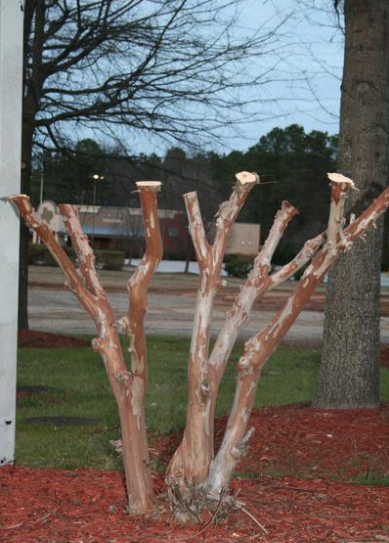
Topping of Trees: Do not top trees to reduce height as this is not good arboricultural practice. It causes large wounds, exposing trees to decay pathogens and causing their long-term decline. A topped tree is an ugly tree, disfigured even when it regrows as well as being potentially unsafe. Regrowth resulting from ‘topping’ will often be denser than the original crown and be weakly attached to the branches it develops from.
Thanks to Dr Christy Boylan who has prepared this piece to support groups with regard to the proper planting, care and maintenance of trees, which are one of our most valuable assets.
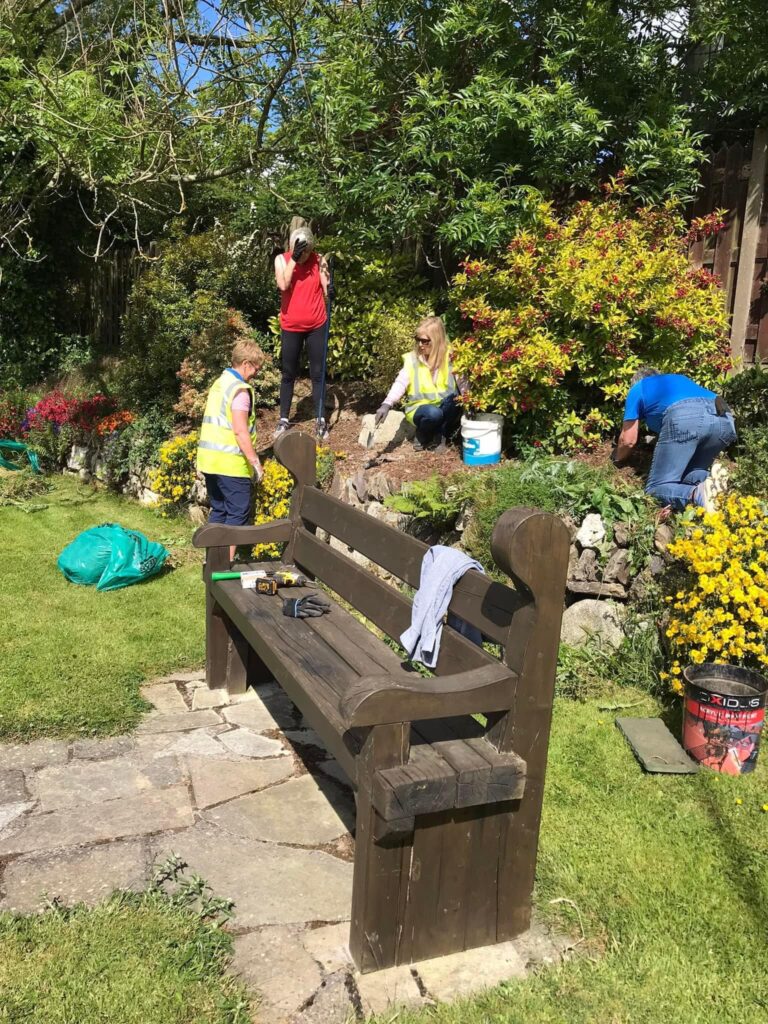
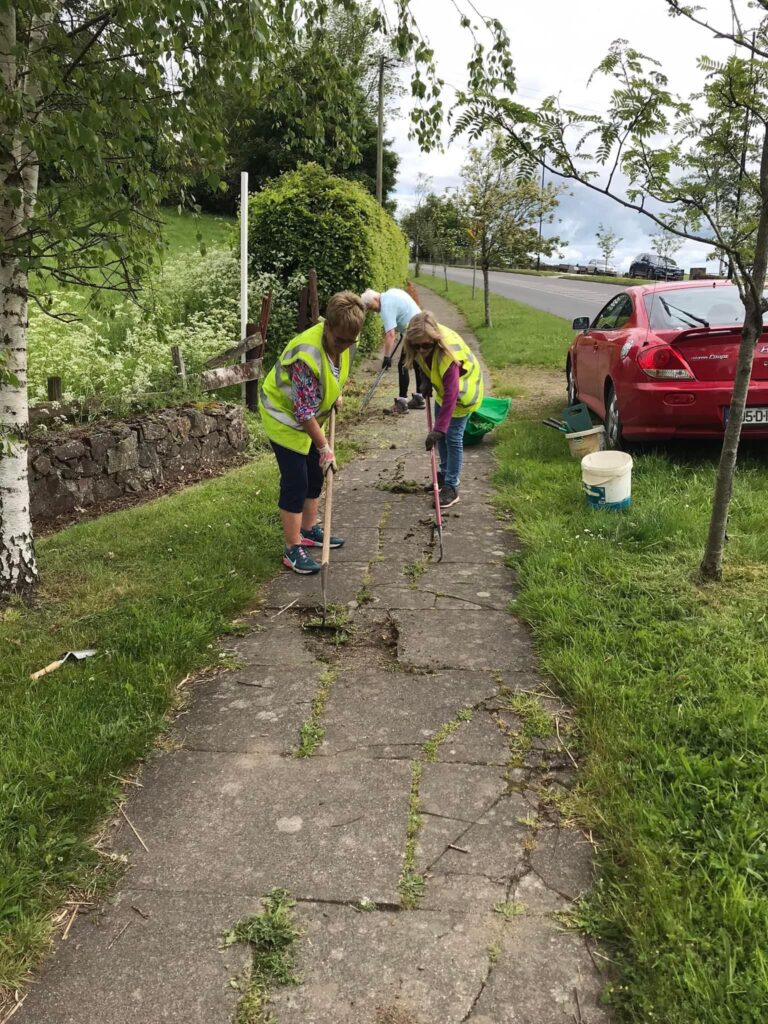
We gained an extra 14 points in this years Supervalu National Tidy Towns competition. A big congratulations and thank you to all the volunteers and the hard working committee. So here’s to our volunteers, the men, women and children who rather than sitting on the fence, they jumped down and made the offer of a helping hand and we are very thankful that they did. This is a great achievement for the group as well as the community.
We received a fantastic report. The adjudicators were impressed with our energy, enthusiasm and cross-community approach to improving our village, strengthening community spirit and making Ferns a more attractive village in which to live or visit. Read the full adjudicators report here
Ferns Tidy Towns encourage and promote environmental awareness and education including waste minimisation and reduction to our carbon footprint and are pro-active advocates for sustainability, biodiversity, preservation of local heritage and the vision of being a sustainable energy community. Joining Ferns Tidy Towns is a great way to get involved in community life. If you are interested in joining and have a particular interest in any area please get in touch. We would be delighted to have you onboard.
The national SuperValu Tidy Towns competition is an annual contest organised by the Department of Rural and Community Development. The competition is supported by the title sponsor SuperValu and many other agencies. The competition involves participating areas being rated on all aspects of their local environment and prizes awarded to the best under many different categories. The overall winner is “Ireland’s Tidiest Town”. which is announced at a national ceremony each year. To find out more about the various categories and how you can help Ferns Tidy Towns please read here.
We use cookies on our website to give you the most relevant experience by remembering your preferences and repeat visits. By clicking “Accept All”, you consent to the use of ALL the cookies. However, you may visit "Cookie Settings" to provide a controlled consent.
This website uses cookies to improve your experience while you navigate through the website. Out of these, the cookies that are categorized as necessary are stored on your browser as they are essential for the working of basic functionalities of the website. We also use third-party cookies that help us analyze and understand how you use this website. These cookies will be stored in your browser only with your consent. You also have the option to opt-out of these cookies. But opting out of some of these cookies may affect your browsing experience.
Necessary cookies are absolutely essential for the website to function properly. These cookies ensure basic functionalities and security features of the website, anonymously.
Cookie
Duration
Description
cookielawinfo-checkbox-analytics
11 months
This cookie is set by GDPR Cookie Consent plugin. The cookie is used to store the user consent for the cookies in the category "Analytics".
cookielawinfo-checkbox-functional
11 months
The cookie is set by GDPR cookie consent to record the user consent for the cookies in the category "Functional".
cookielawinfo-checkbox-necessary
11 months
This cookie is set by GDPR Cookie Consent plugin. The cookies is used to store the user consent for the cookies in the category "Necessary".
cookielawinfo-checkbox-others
11 months
This cookie is set by GDPR Cookie Consent plugin. The cookie is used to store the user consent for the cookies in the category "Other.
cookielawinfo-checkbox-performance
11 months
This cookie is set by GDPR Cookie Consent plugin. The cookie is used to store the user consent for the cookies in the category "Performance".
viewed_cookie_policy
11 months
The cookie is set by the GDPR Cookie Consent plugin and is used to store whether or not user has consented to the use of cookies. It does not store any personal data.
Functional cookies help to perform certain functionalities like sharing the content of the website on social media platforms, collect feedbacks, and other third-party features.
Performance cookies are used to understand and analyze the key performance indexes of the website which helps in delivering a better user experience for the visitors.
Analytical cookies are used to understand how visitors interact with the website. These cookies help provide information on metrics the number of visitors, bounce rate, traffic source, etc.
Advertisement cookies are used to provide visitors with relevant ads and marketing campaigns. These cookies track visitors across websites and collect information to provide customized ads.